From thread to gold, in four steps
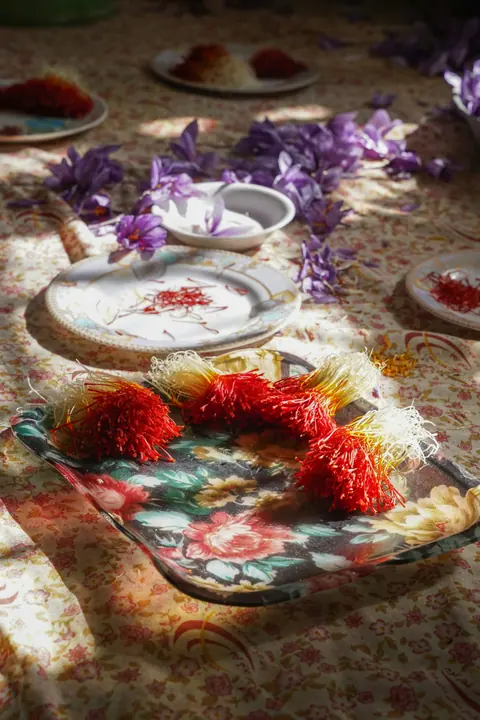
Choose a small pinch
For a dish serving four, begin with a small pinch of threads — approximately 0.1g — and adjust future recipes to taste. Thread size varies, so counting strands is imprecise. More is not necessarily better: too much can make a dish bitter. Do not eat large quantities or use concentrated doses.
Ingredient photograph; the quantity pictured is not a recommended dose. Photo credits.
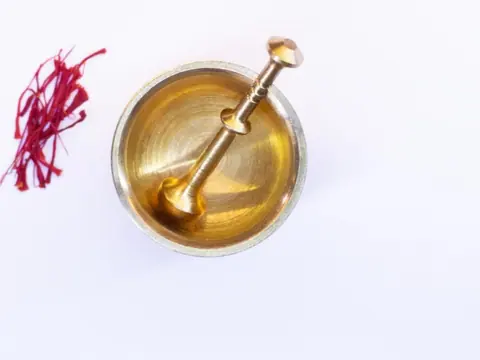
Crush gently
Put the threads in a clean, dry mortar and crush lightly with a pestle. Alternatively, crumble them with the back of a clean spoon in a small bowl. Keep the fragrant pieces; they will go into the infusion. You do not need to burn or fry the saffron.
Generic preparation setup: saffron and a mortar ready for crushing, rather than the action itself. Photo credits.
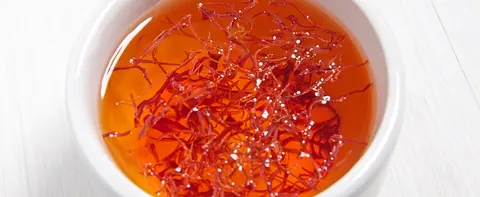
Add warm liquid
Pour over 2–3 tablespoons of warm water, milk or stock taken from your recipe. Cover and leave for about 15–20 minutes while you prepare the remaining ingredients. The liquid gradually turns golden. Use the liquid and softened threads together. This is a simple home-kitchen method, not a claim that one temperature gives a guaranteed chemical result.
An infusion example. The pictured amount is not a dosage recommendation. Photo credits.
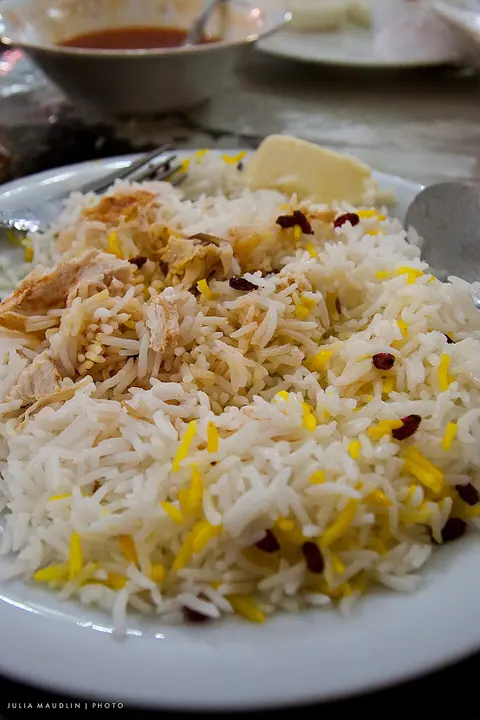
Cook with the infusion
Stir it into rice cooking liquid, a sauce, a soup, custard or cake mixture. Count the steeping liquid as part of the recipe's total liquid. For delicate dishes, add it towards the end of cooking where the recipe allows, so the aroma is not overwhelmed by long, vigorous boiling.
An Iranian saffron-rice serving example, not an Afghan family recipe. Photo credits.
Golden moments in your kitchen
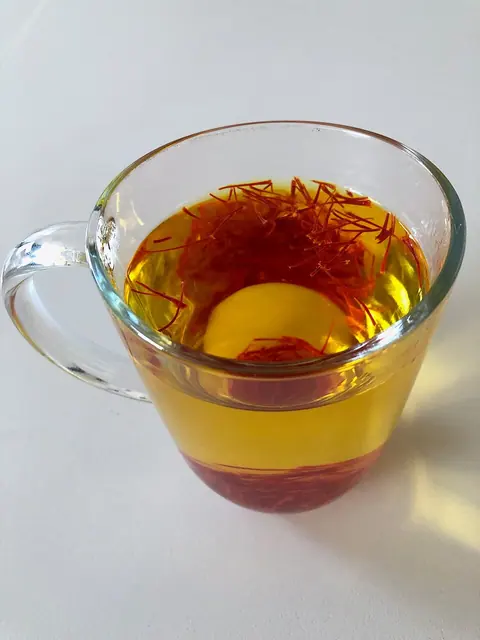
Saffron tea — two small cups
Steep a few threads in a little warm water for 10–15 minutes. Share between two cups, top up with hot water and add a little honey or a slice of lemon if you like. Treat it as an occasional flavoured drink, not a remedy. For a tea blend, add the infusion to your usual freshly brewed tea.
Culinary serving example. Photograph credits & location.
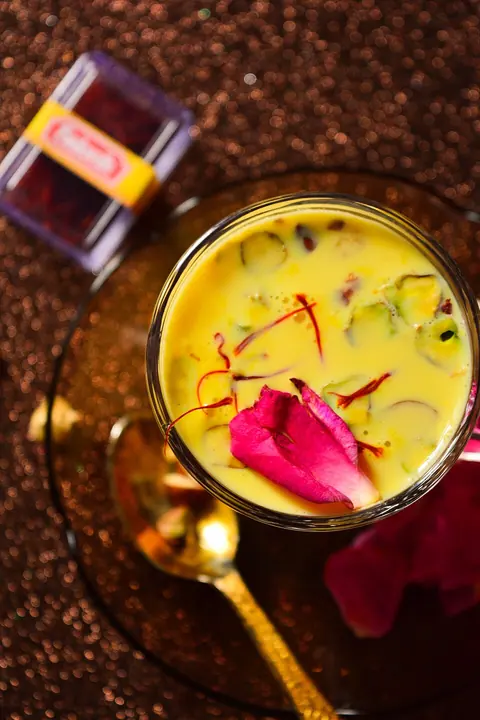
Saffron milk — two servings
Warm 400ml of milk or a suitable unsweetened alternative. Add a few lightly crushed threads and leave gently warm for 5–10 minutes without vigorous boiling. Stir, divide between two cups and sweeten to taste. Check milk and any optional nut ingredients for allergies; plant alternatives have different ingredients and nutritional profiles.
Culinary serving example. Photograph credits & location.
Golden saffron rice — four servings
Rinse 300g basmati rice. Prepare a small pinch of saffron in 2 tablespoons of warm water as above. Cook the rice following its packet instructions, including the saffron infusion within the stated water allowance. Rest as directed and fluff gently. For a marbled finish, mix the infusion into a small portion of cooked rice and fold it through the rest. This is a simple serving suggestion, not a claim to reproduce every Afghan or Persian rice tradition.
Culinary serving example. Photograph credits & location.
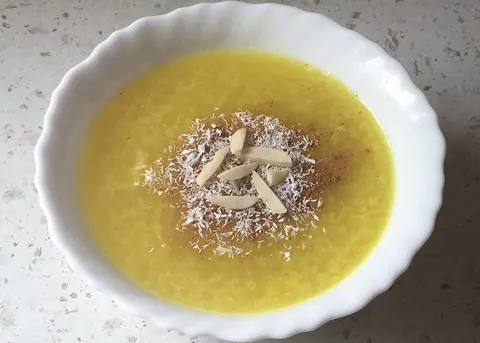
Desserts, baking and everyday cooking
Infuse a few threads in a little of the recipe's milk for rice pudding or custard, or use saffron liquid in a cake batter. It also pairs with fish, vegetables, lentils and gently spiced broths. Begin with a small amount and avoid combining so many powerful flavours that the saffron is lost.
Culinary serving example. Photograph credits & location.
Keep its character
Store dry saffron in a tightly closed container, away from direct light, heat, moisture and strong smells. Use a clean, dry spoon and close the container promptly. Keep it away from a steaming hob. Retain the batch and best-before information on the pack. Prepare wet infusions fresh for the recipe; do not return damp threads to the dry supply.
Watch the technique
- How To Bloom Saffron — Zoya Biglary: an independent Persian-style technique video.
- Cooking delicious basmati rice with saffron, the Persian way — Peaceful Cooking: an independent rice demonstration.
Videos open on YouTube only when you choose a link. No video player or tracking is loaded here. These are external creators, not HERAT SAFFRON's own footage; their recipes may differ from the suggestions above.
A note on safe enjoyment
Use saffron for flavour in ordinary recipes. It is not a medicine, supplement or replacement for treatment. Allergic reactions are possible: do not use it if you have a known saffron allergy. If pregnant, breastfeeding, taking medicines or living with a medical condition, seek advice from a pharmacist, midwife or GP before concentrated preparations or supplements, and ask about your individual food concerns. Avoid excessive amounts. Check other recipe ingredients for allergens. Keep hot drinks and preparation equipment out of children's reach.
Safety & culinary references
- NHS — herbal medicines and complementary therapies. General advice about remedies and medicines, not a saffron food dosage guide.
- NHS — medicines in pregnancy
- University of Basel — a reported saffron allergy case. A case report does not show how common an allergy is.
- University of Vermont — culinary saffron recipe collection
The suggestions here are original home-cooking ideas. Consult a qualified professional about pregnancy, medicines or individual health concerns.